David Bowie :: The Next Day
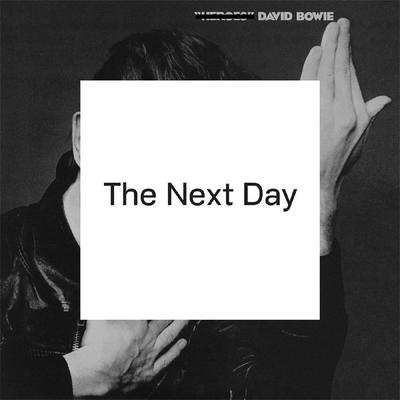
“As long as there’s me, as long as there’s you…”
On January 8th 2013, David Bowie’s 66th birthday, he dropped a bomb on an unsuspecting public: a new single ; with a new album, The Next Day, to follow in March; then, we got a second video just before February’s end; and finally, ten days before the album’s release, an iTunes stream. Following nearly a decade of semi-retirement (or was it misdirection?), the release of Where Are We Now? was a PR masterstroke that provoked an astonished outpouring of love and excitement among starving acolytes. Nobody knew it was coming – even The Outside Organisation, Bowie’s long-time PR company, didn’t know until Christmas 2012. In the cold light of day, he did nothing except make a record and keep it a secret. He did this in our online era, where everyone is over-sharing, stealing music is commonplace, the music industry is transforming, against its will, and most public figures can’t buy a pint of milk without media training. In the process, he made what could have been a drip-drip publicity campaign of teasing and snippets and buzz that would have cost millions completely obsolete. There was a rush to explain how on earth this had happened. Sony’s president, Rob Stringer, was so peeved with the perception that he might not have known about the existence of an album his own label was releasing that he insisted on a correction to a Guardian piece that had dared to claim he found out at the same time as the PR agency. He knew in October, he snorted, desperate to appear to be two extra months inside the loop. He didn’t know earlier because Sony obviously didn’t fund the recording – and if record labels aren’t paying for that old staple, what do they even do now? He is oblivious, seemingly, to his own irrelevance – the joke of being so unimportant to an artist comically lost on him.
As I sat, with The Next Day’s iTunes preview before me, I felt like I’d been given a 14-course Michelin-starred meal all at once and was expected to eat every last morsel. Reviewers got a couple of hours in a darkened room with this album. What a task to demand of them: to write defining reviews for serious newspapers , magazines and websites with only a couple of plays under the belt, the first of which is really just reverberation from the shock of the existence of the album in the first place. What’s the point of such secrecy anyway – to prevent leaks? The right hand doesn’t know what the left is doing because the album started streaming online 10 days before the release date and can now be easily found, online, for free. The music industry have given up trying to sell music at all but PR companies can’t let go of their tiny measure of control. How pointless. But then, half way through my second play, I was driven to write something too, and it felt possible. Perhaps that’s the lesson of these past two months – everything is possible.
We will each have our own unique relationship with The Next Day. There’ll be teenagers coming to him anew, with this album being the first one they’ll have bought (or stolen). What must it feel like to be at the beginning of such a journey? They have untold riches ahead. But whether you’re a kid or Bowie’s age, you’ll have your own personal connection to this album. I can only talk about my own. My first play was rushed, as I was heading out of the house, and I barely heard anything, I couldn’t take it in. Later that same day, I closed the door and the curtains, turned the light off, put on my headphones and pressed play. As the album was nearing its end, about half way through How Does the Grass Grow? I realised that tears were rolling down my face. Why that song in particular I have no idea. It was just too much, perhaps, and it all got concentrated into that one moment. I’ve lost so much in the last year, and while I have never written about it, never felt the desire to write down how I feel, and have felt, I found myself crumbling to a moment of loss, of my own sadness.
Since I lost my mum my heart has hurt every single day. She would always ask me when Bowie was going to make his comeback, and I’d tell her it didn’t look likely at all. And no matter what anyone says now, it fucking didn’t. In a millennium, I could never have told my mum that I thought he was secretly working on an album. I had no clue, none of us did. So she will never know this joy, she will never hear this record. She was the first person I would have called on that breathless day, January 8th. She loved him and would have been so happy about this unexpected turn of events. She would have watched the video for The Stars (Are Out Tonight) a dozen times. That I never got, and will never get, to tell her has caused a sadness that will never leave me. And yet, this record does what it’s supposed to do, at its very heart – it makes me happy.
During the creation of any album, there are a thousand creative decisions to be taken. Whether you make an album that takes two weeks or two years, it’s all about the roads you choose to take. I couldn’t possibly trust Bowie more than I already do to make the right choices and, expectedly, every element of this album has been carefully picked to work and fit together. Every guitar break (the three-pronged attack of Gerry Leonard, David Torn and Earl Slick works wonderfully throughout), bass line, horn and string part, and every insistent, powerful, drum beat is filled with conviction; every lyric and thought is crafted with precision and passionate expression, and every charismatic vocal delivery employs the guile and instincts of the seasoned actor he is. He has created an entire world in which these songs live.
Visconti wasn’t kidding when he said the single wasn’t indicative of the album. The whole experience of listening to The Next Day is to find yourself battered around the head by a man who is letting his silence on life, love, death, war, history, religion and politics end. And yet, and this is the crucial point, this is an artistic statement of someone who wants to fight. It is an angry record, one that expresses vicious and contemptuous judgement, but it also talks of the journey of mortality; it’s partially reflective, true, with the odd look back, but it’s very much thematically rooted in the present, in the world he’ll leave for his daughter one day. It would be easy to say that this bit sounds like it could be on Lodger, that bit is straight out of Scary Monsters and so on. But such flourishes are the lesser strokes of a paintbrush on a huge canvas; The Next Day very much lives and breathes in the present. It has its own personality and will find its own place in the canon. You knew it would, because he is far too clever to put something out after this length of time that didn’t stand proudly alongside the rest. Every decision made is a careful one, and there’s nothing wrong with employing his famed level of control freakery if you’re adding to a back catalogue of such immensity.
The first thing that knocks you over is the remarkable pace it sets off at, with the title song having more than a touch of Tin Machine’s abrasive propulsion as it tells a dark tale of medieval death on the gallows. Dirty Boys is like the sex cousin of Sister Midnight , with a groove so filthy you could imagine a tassel-twirling burlesque performer getting off to it in a Soho dive bar. The Stars (Are Out Tonight), divested of its staggering video accompaniment , is a solid gold pop hit, with wonderful melodic work from Gerry Leonard and David Torn and a gorgeous Visconti string arrangement. The dramatic Love Is Lost tells a dynamic yet indifferent, lonely tale of displacement, which seems to lead perfectly into Where Are We Now? For all the talk of nostalgia, it’s the only track that harks back, lyrically at least, to bygone times. When you know you have more years behind you than ahead, and the gift to siphon those feelings into a creative outlet, the desire to blink for a second and allow for reflection is understandable. But it’s a fleeting moment before we’re off again, into a lovely, light pop song, Valentine’s Day, though the subject, a troubled and dark-minded protagonist, muddles its musical sweetness. The face-melting If You Can See Me follows, a song ambitious and portentous enough to have sat comfortably on Outside. The time signature alone is a blood twister and the chemistry of the brilliant Tony Levin and Zachary Alford makes the song what it is.
It’s at this point that there’s a dip, which after the blast of the first seven tracks feels like a surprise. But then again, Scary Monsters aside, it’s par for the course that a Bowie album has a filler or two, which is no crime. Dancing Out in Space is pretty pedestrian (and the title, good as it is, inevitably makes me think of Flight of the Conchords ) and I’d Rather Be High and Boss of Me (great verses, prosaic chorus) are just good songs, they’re not great. But so what? It’s an album where the ideas spill forth unrestrained, and that’s worth a couple of tracks you know you’ll skip after you know it all better. The odd bit of imperfection is offset by huge swathes of intensity and dazzling quality. How Does the Grass Grow? is beautifully crafted and seems to have some combination of cadence and timbre that makes my tear ducts overflow. How does it do that? (You Will) Set The World on Fire is a mammoth track, with a Slick guitar line Pete Townshend would be proud of. It’s the kind of song that he tossed off in the 80s and, because of his general disinterest in his own music during that period, would have let become submerged amid layers of someone else’s production control. Here, it’s powerful, sleek and insistent.
And then, we get to You Feel So Lonely You Could Die (nice title nod to Heartbreak Hotel). If you’re thinking that this straight-ahead rock album is perhaps lacking something, a big overblown epic, say, this is your moment. Bowie knows exactly what he’s invoking here, and you can do nothing but marvel at its sheer bloody cheek. This extraordinary song, a companion piece to I Know It’s Gonna Happen Someday (itself a parody of a Morrissey homage), or even the hallowed Rock and Roll Suicide, is completely thrilling. It pulls you back and forth, it emotionally exhausts you, and the delivery is off the scale. And just when you think there’s no more emotional heft it can give or receive, as it fades away the drum beat of Five Years comes in and you almost burst out laughing at its brazen flamboyance, arrogance and utter ostentatiousness. The Scott Walker-esque Heat, the album’s closer, is like a Tuesday comedown, a mesmerising mantra-like chant not unlike Heathen.
There are no accidents here. There are no half-thought ideas executed with flippancy. The playing is exemplary and Visconti’s production is imbued with the love and respect and skilled invention that 40+ years of friendship and understanding brings. He knows what’s needed, he knows how to add the right touches intuitively, and the shorthand of their relationship is stitched into every track. Every musician who has spent time making this record has done it with love and devotion in their heart. Asked to keep the album’s existence a secret from those closest to them for nigh on two years, without blinking, without argument, the deal was done. Everyone wants to do their best for him and will wait a decade to get a call then accept the invitation without pause or even a thought of complaint.
All Bowie albums are pictures of his mind in particular moments. Has this set been formed over the last couple of years or has he been collecting and creating, bit by bit, since he walked off stage at his last public performance, the 2006 Black Ball? We will never know, but we do know that recording took place in fragments over two years. Sessions lasting a week, then not a call for months; another couple of tracks, then more silence for more months, until he was ready. If there was external pressure to record or tour, via demands from a record label, from management, from fans, from anyone, he paid little attention. There are no interviews, no explanations. The album says everything he wants to say. He ignored everyone to walk around New York in a baseball cap, and do the odd movie cameo and the school run, and this is what we got.
It’s such a gift, and one I never expected. It’s overwhelming. I could overanalyse it if I wanted. I could try and figure out if, had it come out 18 months after Reality, whether I’d love it this much. I could try and place it in the larger canon and measure it up against albums that have meant so much to me. I could try to think about whether his long absence is affecting how I feel about it. Or I could just answer the simplest question – does listening to it make me happy? Because after all the words are spoken and written, after all the discussion and critical evaluation, and in mind of all of the happiness that I’ve been unable to feel for a year, all that matters is whether it makes me happy. Yes. It makes me happy.
Dig Out Your Soul

I approach each new album with hope and excitement and finally, tentatively, it appears the faith is some way toward being thanked with their new, seventh, album, Dig Out Your Soul. The last three records have left my CD player faster than I would like. I didn't feel there was enough in there to keep listening; this time it feels different. Could they finally, say it quietly, have made a mature album? I never minded that they lacked depth, that their lyrics were poor, it was the songs that mattered. I can go through an album being lyrically unfulfilled if the songs dazzle. This time, there is more to let in. As I have come to expect, the album starts off at a blistering pace - strident, confident opener Bag It Up; The Turning, with its gentle Dear Prudence outro and Waiting for the Rapture, Noel-sung with its Doors Five To One intro and Beatles Revolution cadence, grab the attention immediately. Noel is bullish about the inclusion of his vocals but often I'm keen to get past them to the real rock voice in the band, as evidenced on frenetic stomper single Shock of the Lightning and its crashing Zak Starkey drums. But now Liam writes songs too so that is the balance, the exchange. Noel's vocals for Liam's songs. They are like the parents arguing over the map in the car while Gem Archer and Andy Bell are the children in the back watching the front seat annoyance unfold.
And then something surprising happens - Liam writes the sweetest, most charming song on the album, I'm Outta Time. Where this came from is anyone's guess. His live vocals might be a mixture of shouting, sneering, whisky and cigarettes but no-one can say Liam doesn't turn in some of the great rock vocals when it comes to the permanent record. This song is a real heartbreaker. To be unkind you might call it a Lennon pastiche. There's no attempt made to hide this - the song contains an Lennon interview sample from 1980. It's his love song to John, which has been coming for years. Frankly, Lennon would have been proud to have written it. Noel should watch out; especially since his next vocal (Get Off Your) High Horse Lady, with its Give Peace A Chance backing, marks the album's first average track. But then, at the point in the album where the songs traditionally start to sag, comes Falling Down - the final Noel sung song of the record and all is forgiven, all is returned, all is rescued. One can only be staggered by its power and beauty. Then, as I am used to, the album veers off course somewhat with a couple of poor tracks. The songs have a satisfying groove but aren't memorable - as songwriters, Gem and Andy, both former guitarists in their bands, Heavy Stereo and Ride, respectively, aren't quite there yet. On any other band's album they would be creditable entries but with the standard so high on Oasis records they don't pass muster. Still, the songs themselves are listenable for the music alone - with three guitarists in the band and no recognised bassist, as each of the three musicians swaps bass duties around, this certainly makes for an unusual atmosphere even on the songs that try too hard. It's a relief the band are able to move forward at all - without Gem and Andy, both excellent musicians, to drive the band along Oasis would be stuck in the mire, as they were before 2000 with game but hugely limited band members.
Later track To Be Where There's Life might be melodically unmemorable but its sitar and bass driven hypnotic quality takes it home. With the previous band members it would have been a muddy dirge, this time they get dangerously close to a jam, no bad thing. Penultimate track The Nature of Reality is a skippable mess but the Tomorrow Never Knows reminiscent album closer, the Liam-penned Soldier On, takes the listener out on a high. Oasis have made a mature album. For any other British band, ok is good enough. I expect more, need more, demand more from Oasis. If they can build on it they might become the band I've always wanted them to be.
...
Arcade Fire, Neon Bible

If I’d had to review it after one listen I imagine mine would have been somewhat like Rolling Stone legend David Fricke’s in tone. Reading his 3 1/2 star review, it’s certain to have been done after spending a mere 50 minutes in the company of this band. I confess that on first play I was under whelmed too. The songs didn’t leap out at me as debut Funeral’s had. I sat quietly after the first play and considered the nature of the modern music product versus the relative attention span of the listener. In eras gone by, albums were called ‘growers’. My parent’s generation might have fallen in love instantly with an album like Revolver but they would have to work hard at material like John Wesley Harding. Shouldn’t great albums, work that lasts, demand repeated plays? If you can get a full sense of an album on only one turn I’m not sure it’s going to last in the great pantheon of work. I appreciate Oasis. They are one of the great British bands of their time and I own each and every one of their releases but their albums have a puddle’s depth. And, aside from the first two, I have felt no desire to listen again to the rest of their discography.
In that spirit, I felt the calling of Neon Bible, an album that implores you to play it over and again. There can be nothing that affirms your love and passion for music more than a release that you sense holds great depth, a shining silver circle begging to be swallowed by a music system that does it justice. This is a dark album, a gothic record in the traditional sense, and it demands attention. I fell for Funeral after a Bowie recommendation but I had no right to expect such a grand leap forward for the follow up. It’s a sumptuous, lush, complex album. It crackles with indignant fire on 9/11 inspired track Antichrist Television Blues. For Ocean of Noise you float on a cloud above your bed as if you’ve woken up in a Michel Gondry film.
There’s a signature Arcade Fire sound: a crescendo of music, as a driving, determined song builds towards its zenith and explodes finally into release. It’s a joyous feeling when it happens and it’s never better demonstrated on No Cars Go, itself a reworked version of a track on their 2003 self-titled debut EP, and Keep The Car Running. Album closer My Body Is A Cage is a sombre, powerful, organ-laden triumph, a song that aches your heart and mind. There are few other bands currently able to pass such a musical current through your body. This collective and the mind-bending array of instruments they’re able to call upon have created an album of immeasurable beauty. It’s not only an album I don’t see beaten easily in the Album of the Year rush at 2007’s end but it’s a piece of art that may not be bettered in their careers.
...
Concert for Bangladesh Deluxe Edition
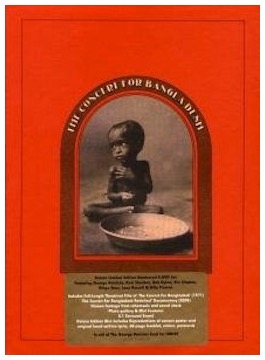
When the Beatles finally creaked toward calling it a day in 1970 the reaction was to wonder if any of them would have a hit again (seems a ridiculous notion now, that they wouldn’t) - George was the first, with My Sweet Lord hitting number 1. Shortly after that his attention was diverted by the tragedy unfolding in Bangladesh, a part of the East India coast. The eastern part of Pakistan was struggling to become the separate state of Bangladesh and refugees by the thousand started their trip to make new lives. Torrential rains caused massive flooding and a humanitarian disaster threatened. Ravi told George and he recorded the song 'Bangladesh' to raise money and then decided to really have a go by putting on two concerts at Madison Square Garden, one afternoon performance (as is customary with Indian music) and an evening show.
The organisers didn't exactly have the best reputation... the music was produced by general nutter and now alleged murderer Phil Spector and the gig was produced by legendary crook, Stones manager, and cause of much of the Beatle break up, Allen Klein.
George spent 6 weeks calling friends and asking them to perform including all of the former Beatles. Paul refused no doubt because of the Klein participation and John said yes after George insisted Yoko didn't perform (smart man!). However following an argument with Yoko about it, John decided to pull out. Ringo of course said yes. As did friends Billy Presston, Leon Russell, Jim Keltner, Badfinger, Eric Clapton, Jesse Ed Davis and of course, the jokerman at any party, Bob Dylan. The concert was a huge success and raised £250,000. The real money came after from TV rights to show the gig (I had an ancient video copy, terrible quality, from one such American broadcast), a theatrical release and the soundtrack made a ton of money too. The incredible thing about the gig is that you can feel the fresh Beatle wounds on stage, even more so from the audience. Several songs were played from his newly released All Things Must Pass and a few Beatle George classics, played beautifully - Something, While My Guitar Gently Weeps and Here Comes the Sun. The latter, watch out, has a lovely moment at the start where George sees someone he knows at the front and lets out the sweetest smile. In short, this set is worth buying.
The packaging is exquisite, the concert (which begins with a wondrous Shankar performance) is superb and the extras are plentiful - documentaries, rehearsal and soundcheck footage, postcards, Apple window sticker, poster and a copy of the handwritten lyrics to Bangladesh. This was the first charity concert, the first and the most innocent, where rock stars stopped thinking about their profile for a day and just went ahead. Sure enough though, Dylan had a last minute wobble because of the presence of cameras and had to be coaxed onto the stage. George said that when he introduced him he wasn’t actually certain he’d come out to play. But he pulled himself together and put in a superb performance. Everyone did it for George, not for record sales. As for him... it makes me sad sometimes just to watch him. He was a beautiful man, totally at one with himself in a way the rest of the Beatles never were, and the world is a poorer place without him.
...